
Welcome to Print & Play Friday! It’s September 11th and we’ve got a fresh batch of print and play news and games for your reading (and playing) pleasure.
Table of Contents
Main Feature: What Makes a PNP Worth Printing?
New Games This Week
Community Spotlight: The Squirrels of Wildwood – Gameplay Walkthrough
In Case You Missed It
Crowdfunding News (PNP Previews & Campaigns)
Where Are They Now?

What Makes a PNP Worth Printing?
JASON GREENO // SEPTEMBER 25TH, 2026
Print-and-play games are inexpensive. At least that’s what I tell myself while looking at another game I want to download.
But the file is really just the beginning. There’s the paper, ink, cutting, folding, sleeving, and occasionally the realization that I should have read the printing instructions before sending thirty pages through the printer.
More importantly, there’s time.
Printing a PNP is a small investment in a game I haven’t played yet. Even a one-page roll-and-write is asking me to stop, print it, find the right dice, and learn how everything works. A card game may take an entire evening to build before it ever reaches the table.
So what makes a game worth all of that?
I Want to Know What I’m Getting Into
Before I print anything, I want a reasonably clear idea of how the game works.
I don’t need to understand every rule, but I want to know what I’ll actually be doing. Am I filling in a map? Managing a hand of cards? Exploring a dungeon? Trying to build an engine before the game crushes me?
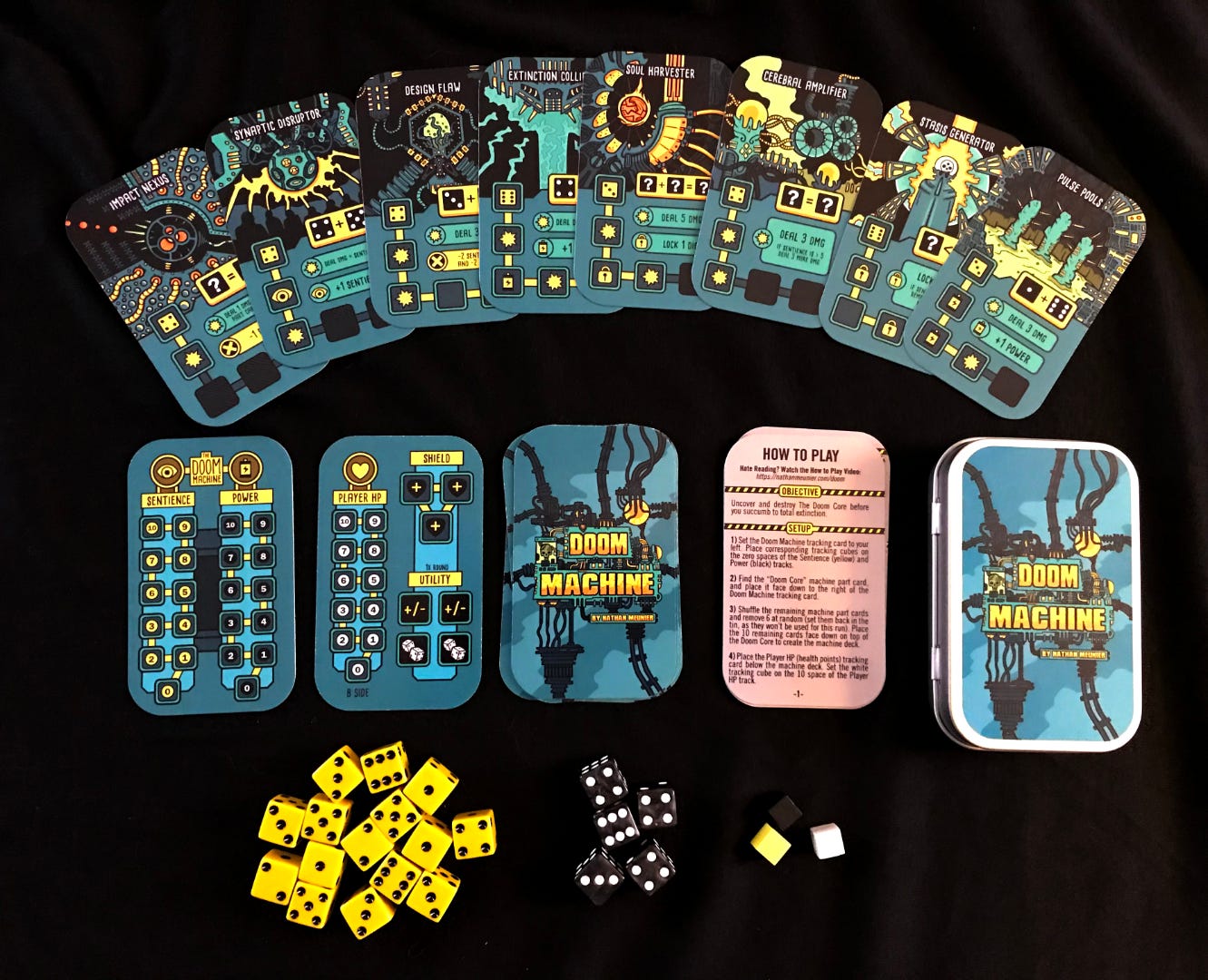
A few pictures of the game in play can help a lot. A short gameplay video is even better. Show me the sheet, the components, and what a turn looks like. That’s usually enough for me to decide whether a game is something I’ll enjoy or just something that has an interesting theme.
It also helps to know exactly what I’ll need. If a game requires twenty pages, four different dice, cubes in six colors, and a deck of cards, tell me before I press Print.
That doesn’t mean I won’t make it. I just don’t like being surprised halfway through.
The Work Should Match the Game
I’m willing to put more work into building a game when it feels like the game will give something back.
If I’m printing a short roll-and-write, I expect the process to be simple. Give me a sheet, maybe a rules page, and let me get started.
If I’m cutting out a large deck of cards and assembling tokens, I’m expecting a game with more depth or replayability. The amount of game should feel appropriate for the amount of work needed to make it.
There are exceptions, of course. Sometimes a game looks so good that building it becomes part of the appeal. I’ve printed games because I wanted to see the finished thing sitting on my table.
But generally, the more a game asks me to cut, fold, glue, and sleeve, the more I want to know that I’ll play it more than once.
Give Me a Reason to Print It
A PNP becomes especially interesting when it does something that works because it’s printed on paper.
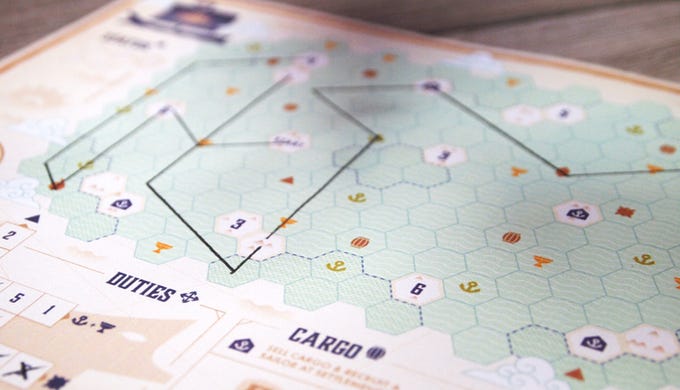
Maybe I’m drawing directly onto a map. Maybe the sheet changes permanently over a campaign. Maybe I’m folding it, cutting pieces from it, or gradually revealing new sections. Some games ask you to damage, alter, or destroy the page in ways that would be difficult to include in a traditional boxed game.
Those are the games that really get my attention.
I love a clever card game as much as anyone, but I don’t want PNP to feel like it’s only the cheaper version of a physical game. Paper can be a game component. A pencil mark can track movement, record damage, build a city, or permanently change the rules.
When a designer takes advantage of that, printing the game doesn’t feel like an extra step. It feels like the beginning of playing it.
Make It Easy on My Printer
I don’t think every PNP needs to be black and white. I like good artwork and I’m happy to use some ink when it adds to the experience.
But I appreciate designers who remember that these games are being printed at home.
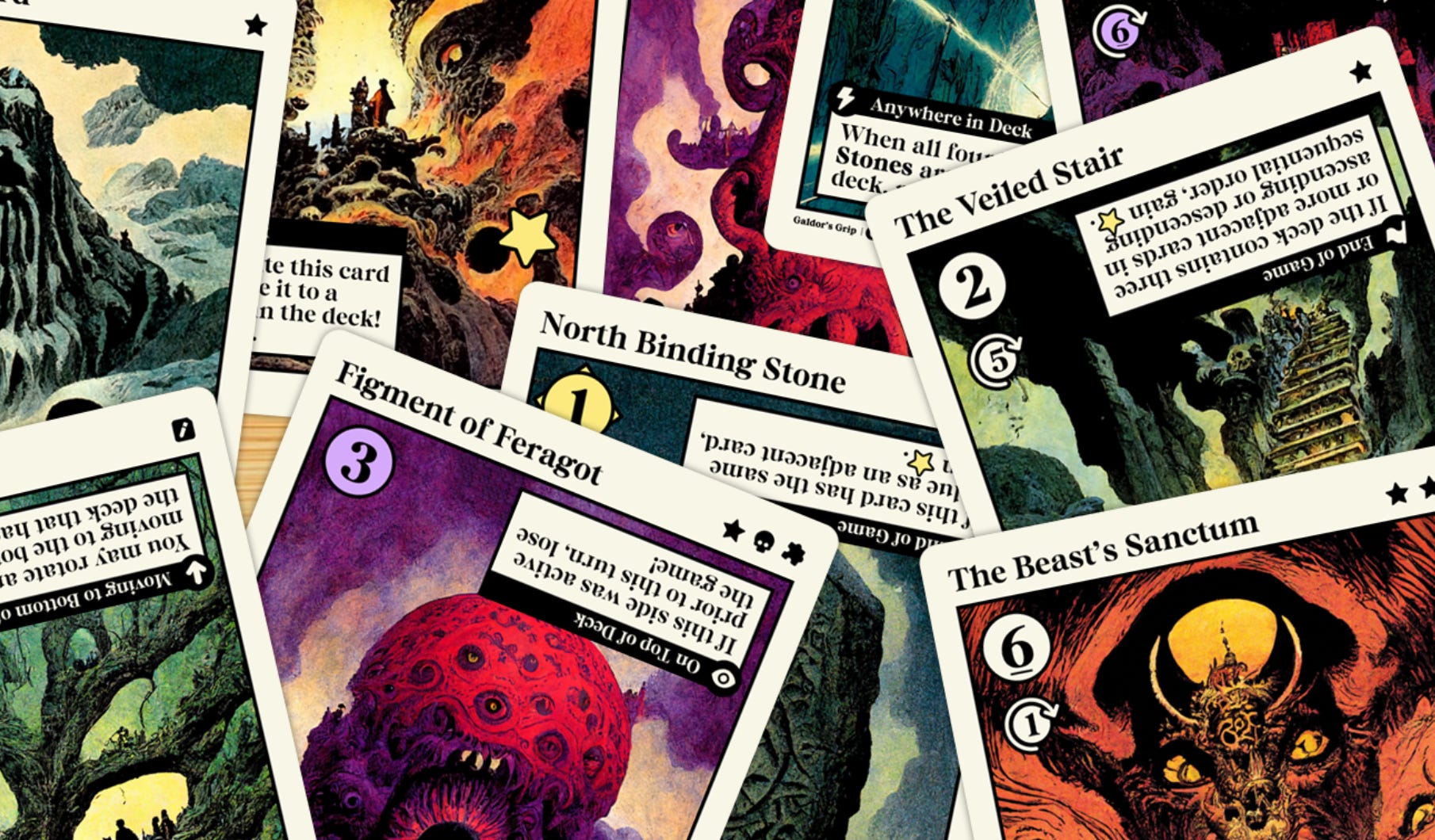
Huge areas of solid black make me nervous. So do important details that disappear when a page is printed in grayscale. A low-ink option is always welcome, especially if it still feels like a finished version of the game instead of a stripped-down afterthought.
I also appreciate both Letter and A4 files. Obviously, I’m using Letter paper, but PNP reaches players all over the world. Making people wrestle with printer scaling isn’t the kind of challenge most of them downloaded the game for.
Clear cut lines, sensible card spacing, and backs that are easy to align also make a difference. None of these things are exciting features, but they can decide whether making the game is enjoyable or frustrating.
I Want to See a Little Personality
A PNP doesn’t need expensive artwork to look good.
Some of my favorite games use simple icons, limited colors, or hand-drawn illustrations. What matters is that the game feels intentional. I want to see some evidence that the designer cared about how the final printed game would look and feel.
Good graphic design also makes learning the game easier. Information should be where I expect to find it. Icons should mean the same thing every time they appear. Text should be large enough to read after the page comes out of an ordinary home printer.
A game can be rough around the edges and still have plenty of personality. In fact, that handmade quality is often part of what makes independently designed PNP games interesting. I would rather see honest, human-made artwork with a distinct voice than something polished but empty.
Will I Want to Print Another Copy?
This may be the biggest question.
Does the game offer different characters, maps, strategies, or outcomes? Can I play it again and have a meaningfully different experience? Will I want a fresh sheet because I’m curious about another approach, or because I think I can do better next time?
Not every game needs endless replayability. A really good one-time experience can absolutely be worth printing. But I like knowing that the designer has given me a reason to return.
That reason doesn’t have to be complicated. Sometimes it’s simply a score I want to beat. Sometimes it’s a different path through the game. Sometimes I failed so badly that I refuse to let the game have the last word.
Worth Printing
I don’t think there’s a formula for deciding whether a PNP is worth printing.
Sometimes I choose a game because the mechanics look clever. Sometimes the artwork grabs me. Sometimes it’s one page, free, and strange enough that I need to know what happens.
But the best PNP games respect the player’s investment. They make it clear what we’re building, make the building process manageable, and then give us an experience that feels worth the paper scattered around the table.
The download may only cost a few dollars—or nothing at all—but printing a game is still a commitment.
The good ones make me happy I pressed the button.
Do you have a game you’d like to see me play and talk about on a future PNP Friday?
Submit your game here. I can’t promise a response to submissions (I’m just one guy!), but I do my best to check out all the games that come in. Not every submission will get covered in a main article, but if the game is solid I’ll be sure our good readers know about it.
Want to support PNP Arcade?
Everything here is free to read, and I’d like to keep it that way. If you enjoy the articles, game discoveries, tutorials, and other PNP nonsense I send your way, you can become a paid subscriber to help support the time that goes into making it all happen. No paywalls. Just a way to toss a few bucks in the tip jar if you’d like to help keep PNP Arcade going.


The Majors
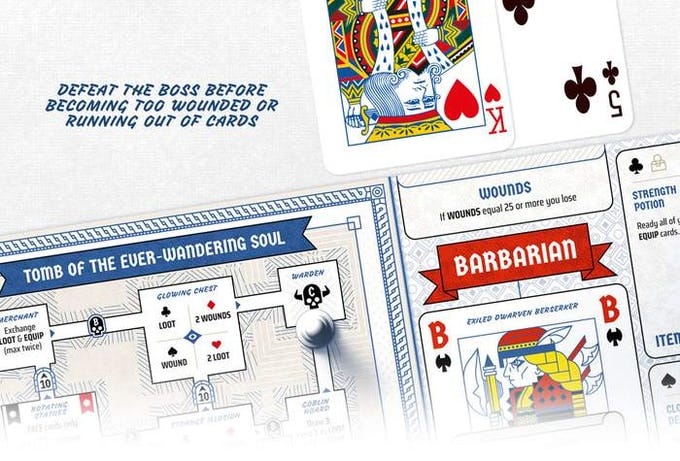
The Majors boils baseball down to six dice, a regular deck of cards, and a score sheet. Each at-bat begins with opposing dice rolls, but cards allow players to overturn results and counter one another. That means even a simple pitch can turn into a small battle between the pitcher and batter. The $5 download includes the complete game, lineup abilities, scorecards, and a print-at-home zine.
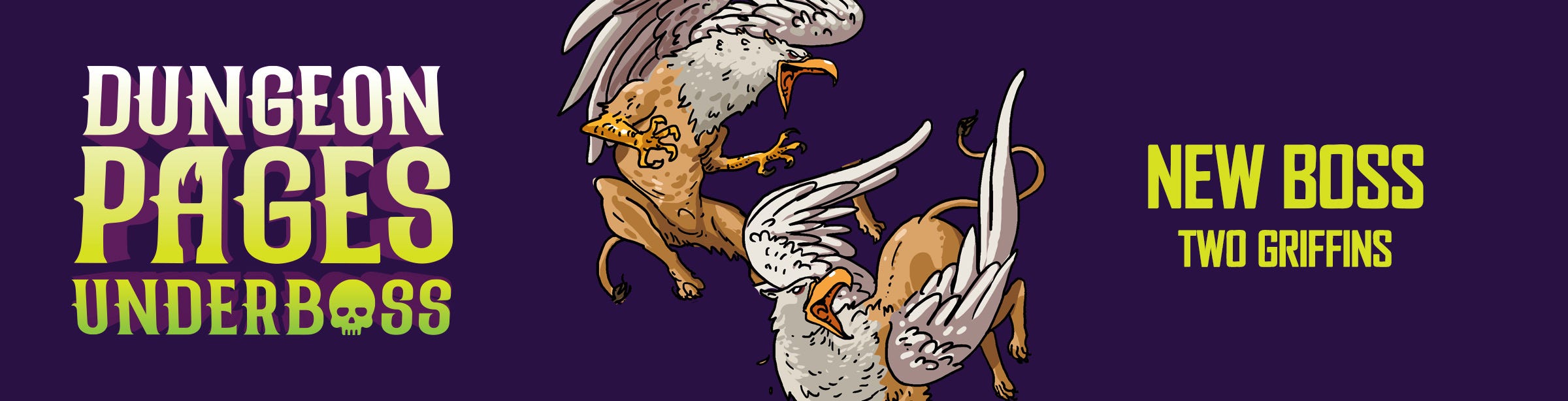
Dungeon Pages: Underboss - Two Griffins
The year-long set has been updated with the newest boss and dungeon. The two Griffins and their grasping claws live up to their name with the ability to steal both evil dice with their boss power. Now what dastardly deeds to accomplish with these ill-gotten goods! Link.
Publishers / designers submit your new PNP releases here: PNP Arcade Submission Form.

The Squirrels of Wildwood – Gameplay Walkthrough
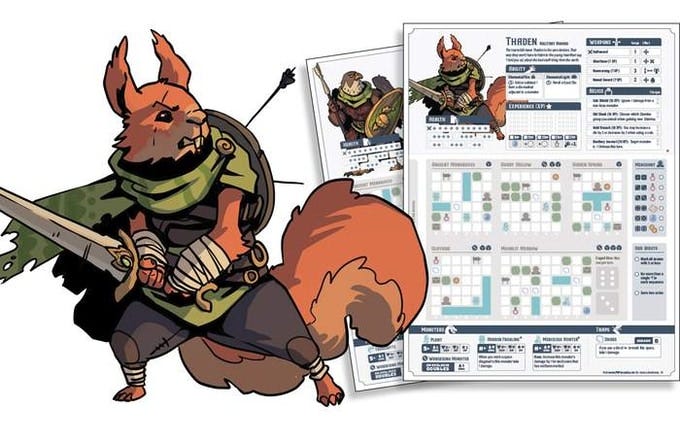
Anthony Hobday walks through several rounds of his new PNP dungeon crawler and shows how movement, attacks, enemies, and the different mana zones work. I like videos like this because you can see whether a larger PNP will work for you before committing your printer to the job.

Form A-83
Your goal is simply to submit one form. Unfortunately, that requires navigating ten floors of government offices, collecting annexes, certifying copies, paying fees, surviving inspections, and obeying new regulations that may contradict the old ones. It’s a free solo game powered by two d10s and an increasing Madness score. Anyone who has ever been sent to a second office because the first office gave them the wrong paperwork will probably understand the horror immediately.
Grab Lost Island from Itch.io

Here’s a PNP-related crowdfunding campaign that we thought you might find interesting:
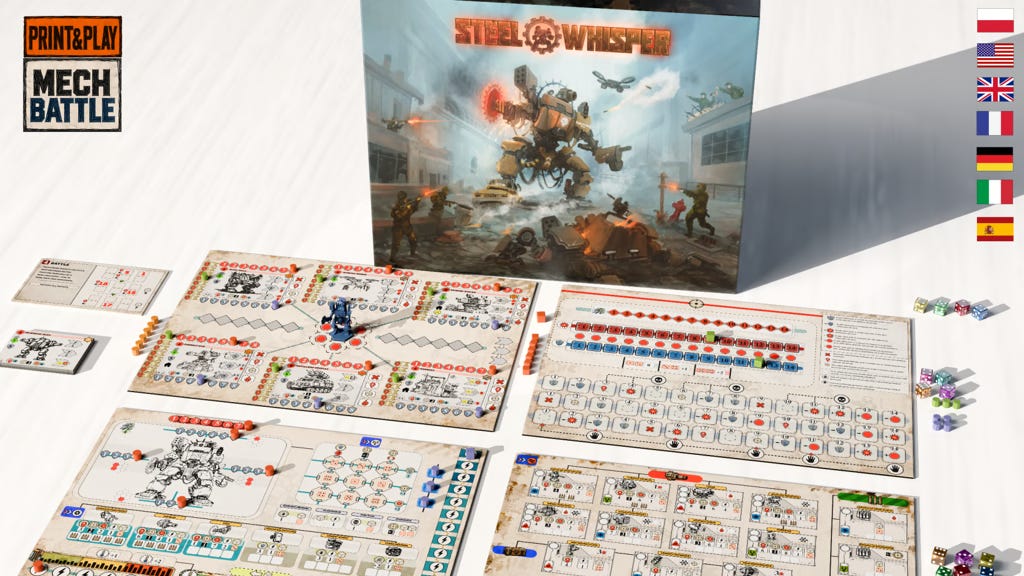
Steel Whisper (Radek Ignatów)
Steel Whisper puts you in control of a barely functioning combat mech sent into a post-apocalyptic city on a desperate mission. Each round, you assign dice to movement, weapons, sensors, repairs, and cooling while trying to manage your position, armor facing, and an unstable reactor that really doesn’t need any more problems. It’s a solo game focused almost entirely on tactical combat, with enemies surrounding your mech and activating after your turn. Games take about 20–40 minutes, and the basic PNP pledge is only $7.
The Squirrels of Wildwood
This is a low-ink dungeon crawler about squirrels protecting a magical English woodland from corrupted creatures. You control two squirrels at a time, moving across hex maps and changing how your actions work based on the type of mana beneath you. The complete game includes eight scenarios, character progression, crafting, standees, and rules for making your own scenarios. Every backer receives the PNP, and there’s a free first-scenario demo if you want to try it before backing..
Check out the Kickstarter
Submit your PNP crowdfunding projects here:
PNP Arcade Submission Form.

Are you looking for your favorite publishers from PNP Arcade? Check out this list.
Alexander Shen: If you’ve never played Quests Over Coffee or any of Alexander’s other fun games, be sure to check out his stuff on Itch.io. Link.
Button Shy Games: With hundreds of games on PNP Button Shy started uploading games on Itch.io and The Game Crafter. Expect regular releases of the older library of games as well as new content to come. Itch.io Link. The Game Crafter Link.
Cezar Capacle: Brazilian game designer, graphic designer, architect and musician. He’s been creating unique games for the past five years, on a variety of genres. Link
Clearly Sharp: Home page for Daniel Young, the designer of Gem Getter and Forest Floor. Link
Daws of Darkness: The Lost Village and its mini-expansion are now available at itch.io. The thick line art style of these co-op games really makes them stand out. Link
Epic Endeavor Games (Jason Greeno): The independent games by JG can be found on his Patreon page. Link.
Grimscribe: If you are looking for the year-long Grimlore series, you can find those here. Publisher Website. PNP Stash.
Jack Neal Games: Jack’s games about power, value, and systems (Rust and Revenue and Charters: Profit Through Public Works) are now available at JackNealGames.com. Link.
Jason Greeno / Epic Endeavor Games: Jason hosts his collection of games like Night Class (superhero roll and write) and The Cursed Menagerie (haunted cards and dice) at his new Itch.io page. Link.
Kealf Games: The new location for all things from Kelvin Soong of Kealf Games. PNP Stash Link.
Mark Tuck: Mark has brought his collection of PNPs (from the beloved Orchard to Pocket Aquarium, and many more) to the Game Crafter. Link.
Nathan Meunier: Featuring many of his games in both physical and PNP, you can now grab Doom Machine, Mindbenders, Hot Garbage and more at doomthoughts.com. Link.
PNP Arcade Publishing: For everything Dungeon Pages (and more to come) check out the PNP Arcade page at Itch.io. Link
Shiny Pigeon Games: PNP Arcade previously hosted Around The World In 15 Minutes, but at their site you can pick up Starfront Scouting Academy and the Packing Party series of games. Link.
We Heart Games: The Itch store for Mike Berg’s games (Crownfell, Exobase, Exoship) has the entire catalog of games. Link.
Would you like to submit a PNP Game?
With the help of publishers, designers and the community we will continue to share PNPs with all of you.
Click this link to submit information about a game
Don’t miss the weekly print and play games and news.
Games featured in these posts are not sponsored.